


Osteochondrosis is a change in the interarticular and intervertebral cartilages.Osteochondrosis is diagnosed in all joints without exception, however, according to medical statistics, such lesions are more common in the intervertebral discs.
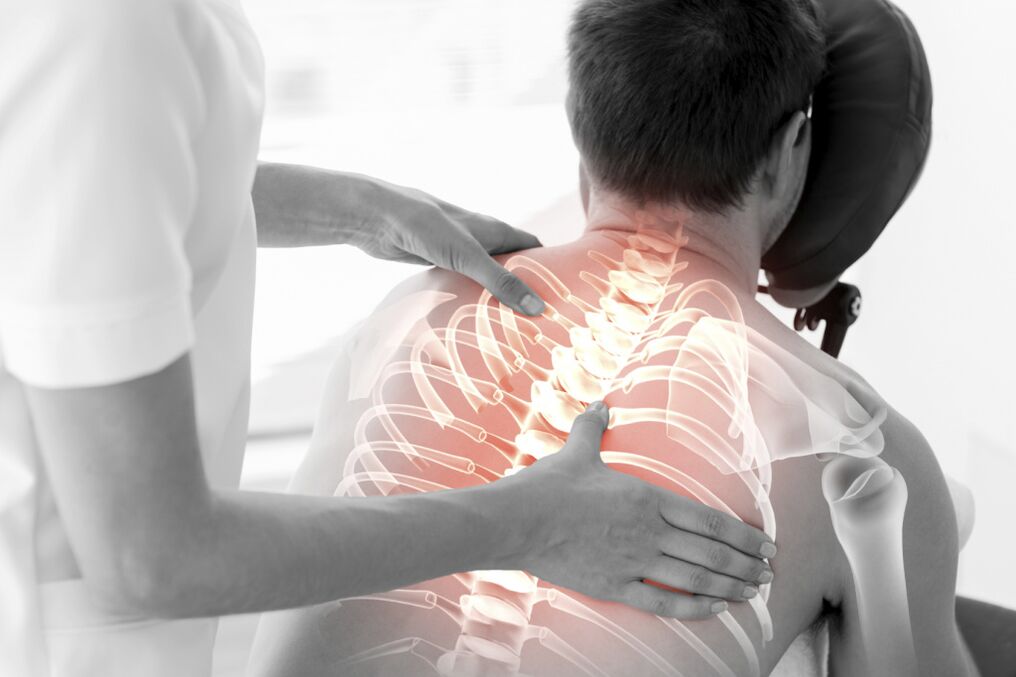
Functions of intervertebral discs
The main function of the intervertebral discs is to absorb shocks during walking and running.Few people think about the load on the spine during movement.Every step gives a jolt to the vertebrae.If there were no discs between them, the bones would wear down very quickly and the nerve endings in the spinal column would be constantly pinched between the vertebrae.
Its ability to absorb shock depends on the quality of the intervertebral disc.The younger the person, the more flexible the discs.In newborns, the articular cartilage and intervertebral discs are almost 80% water, which allows them to be as flexible as possible, like a sponge.As we age, tissues wear out, dry out, become less flexible and lose their shock-absorbing properties.The older a person is, the greater the risk of developing complications of osteochondrosis, which manifests itself in the following:
- hernias;
- radiculitis;
- stands out.
Symptoms of intervertebral disc disease
There are osteochondrosis of the cervical, thoracic and lumbar regions.At the same time, problems in the neck region may not be accompanied by characteristic pain at all, while problems in the chest may be reflected not by the spine, but by chest pain, which is why patients often confuse it with heart or bronchial pain.
Sometimes osteochondrosis of the cervical spine manifests as pain in the arm.If there were no obvious injuries that could cause pain in the arm, such a symptom should be a reason to examine the cervical spine.
If the pain is concentrated in the sacral area, flows to the leg and buttocks (usually only on one side), this indicates damage to the intervertebral disc in the lumbar region.After applying pressure to the injured area, you may experience numbness in your leg, arm, or tingling in one limb.The main noticeable symptoms of osteochondrosis of the intervertebral space are:
- Pain in the sacrum, preventing sitting.
- Back pain that prevents you from bending over.
- Pain that eases when walking.
At the first signs of damage to the intervertebral discs, you should avoid heavy physical load on your back, i.e. do not lift anything heavy.
Why does osteochondrosis occur?
The state of the disks is affected by several factors.These include smoking and excessive exercise, especially if daily activities involve lifting heavy objects.On the other hand, a sedentary lifestyle and poor nutrition are a sure way to destroy the disc.In addition, special work that forces you to keep the trunk in an uncomfortable position, constant load on only one shoulder, as well as sleeping on an improperly selected mattress, pose a risk of developing osteochondrosis.
Sleep properly on a mattress of medium hardness so that the spine is in a natural, even position while resting.Soft feather beds just look comfortable.Lying on a soft bed for a long time causes back pain in the morning.This happens because the back muscles are stretched when the back bends under its own weight.Stretching of the back muscles, which continues throughout the night, causes pain not only in the lower back, but along the entire length of the spine.
Flat feet pose a risk of developing osteochondrosis, as such a foot cannot fully perform the functions of a shock absorber.Because of this, the spine bears an increased load and the discs wear out faster.
In addition, overweight people put more strain on their spine than people whose body mass index is close to ideal.You need to watch your figure so that the ratio of weight to height does not put additional stress on the skeleton.
However, perfectly healthy people who lead a sporty lifestyle can suffer from osteochondrosis.The main reason for this is injury.An unfortunate fall or blow to the spine often leads to hernias, protrusions and osteochondrosis.
Diagnosis of osteochondrosis
A surgeon, orthopedist or neurologist can diagnose.Given that pain in the lumbar region is often the reason for contacting a neurologist, such patients are first examined by a doctor in that specialty.First, the patient is examined.To make a diagnosis, you must assess the patient's ability to twist, bend, sit, walk, and bend the legs.The spine is then palpated.Thanks to the manual examination, the doctor will be able to identify pain points and feel compressions and even hernias between the vertebrae.
To confirm the diagnosis, the doctor prescribes an X-ray of the spine.This is the simplest test that can be performed even in a rural clinic.X-rays have long been available in medical practice and are an integral part of every trauma department.If the X-ray does not confirm the diagnosis, or if a more detailed examination is required, a CT scan or MRI of the spine is prescribed.With the help of such an examination, it is possible to determine the quality of the discs, assess their flexibility and integrity, and identify hidden pathologies.
How to treat osteochondrosis
As a conservative treatment, non-steroidal anti-inflammatory drugs can be prescribed.If there are no more serious lesions on the discs, and the doctor noticed on the pictures that the cause of the pain lies in the pinching of the nerve of the inflamed muscle, then the treatment is limited to alleviating the inflammatory process.In addition, heat therapy may be prescribed to reduce swelling, relax the muscles, and release the pinched nerve.
In the case of a herniated or protruding disc, the problem of back pain can be solved with surgery.Severely worn vertebrae can be replaced with a prosthesis.